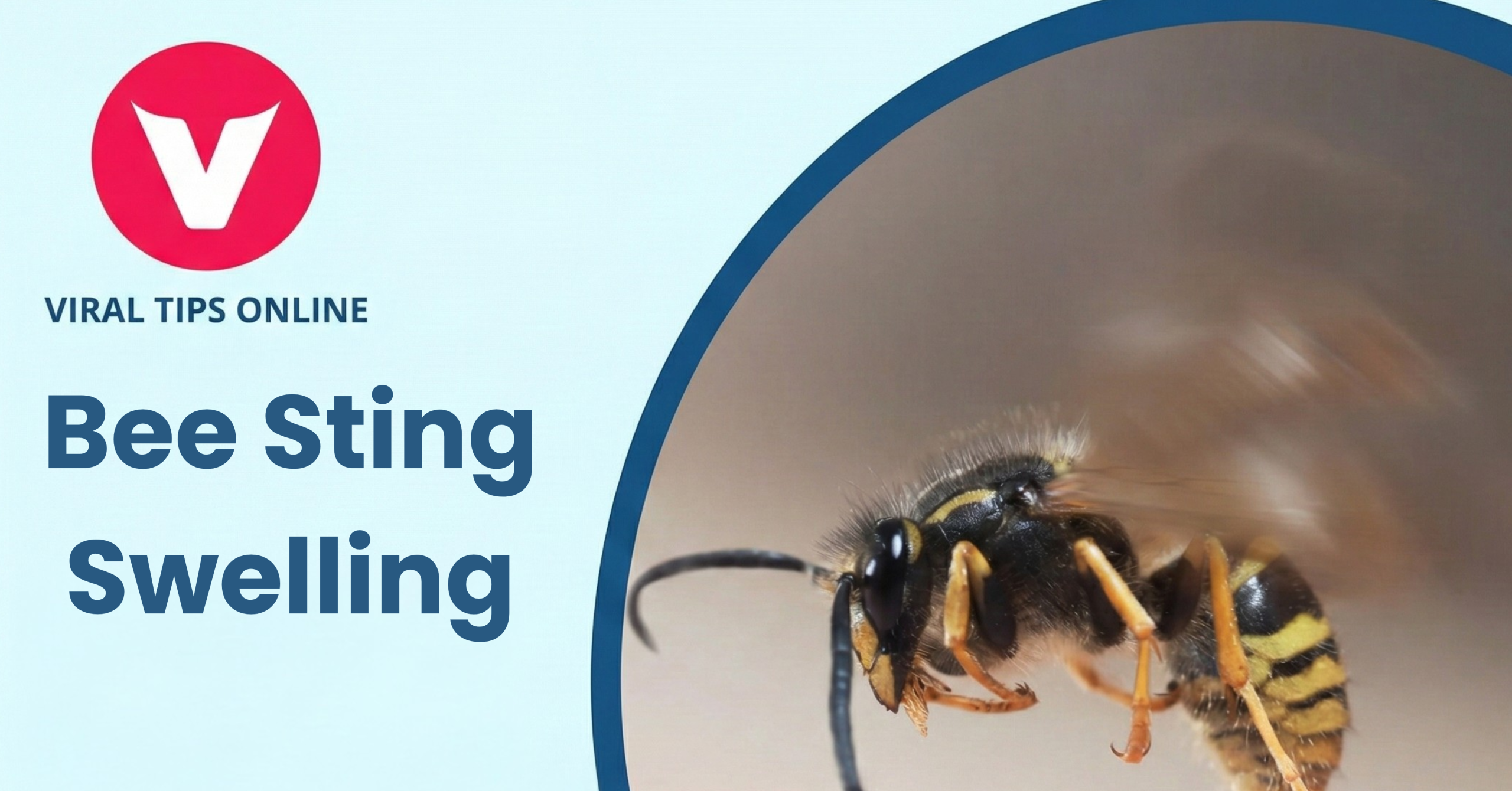
Bee sting swelling: Causes, Remedies & Treatment Guide
Discover how to treat bee sting swelling fast at home to reduce redness and pain. Know about bee sting types and preventions.
What happens when a bee bits you?
A bee stings and injects a poison in to skin. This poison makes an immune reaction in a body, which causes swelling. Some signs include are given below:
- Redness around a sting
- Sometimes redness spreads out of an area of sting.
- Pain and emotion
- Itching
A bee sting swelling reaches its best within 24 hours and subside and start reducing within the next 2-3 days. These factors affect the reaction.
First Aid after bee sting swelling
A bee sting swelling can be treated at home provided that it is not severely allergic.
1: Remove a bee sting swelling
Remove the stinger using a card or fingernail. In this way not extra poison enters into the body.
2: Clean an area
Take care not to be infected by washing with soap and a lot of water.
3: Use a cold pack
Place an ice pack covered with cloth on the sting and leave it to act on the sting for 10-15 minutes. This alleviates pain and swelling.
4: Use Soothing Topicals
Plastered with baking soda will neutralize poison and calamine lotion will suppress itching.
5: Take Medication (Where Necessary).
By using allergic medicines, you get relief. Mostly a simple pain killer can also relieve in case of more swelling.
6: Elevate the Area
In case of stings on legs/arms, the area should be elevated to minimize the swelling.
Home remedies of Bee Sting swelling.
There are a number of home remedies that can be used to remove bee sting swelling. Here’s a breakdown:
Baking Soda Paste
Mix baking soda with water to make a paste. Then cover the sting with it for 10-15 minutes. It can prevent the acidity of different poisons and swelling.
Danger: Excessive use can be irritating on a sensitive skin. Wash in case of irritation.
Aloe Vera Gel
A redness, swelling and itchiness can be treated using Aloe Vera due to its cooling and anti-inflammatory effect.
Honey
Honey is also natural and has anti-inflammatory and bacterial effects. Swellings and infection can be avoided by rubbing a small quantity of it on the site of sting.
Apple Vinegar
The use of apple vinegar can be used to remove the poison and relieve irritation.
Danger: Pure vinegar may cause irritation to a sensitive skin. Test on a small area first.
Witch Hazel
Witch hazel is anti-inflammatory and could be useful to remove redness and swelling.
Precautions: Do not use on broken skin should be discontinued in case of irritation.
Essential Oils
Lavender or tea tree as a diluted essential oil can cause the inflammation to decrease and help in relaxing skin.
Precautions: This should be diluted all the time there are those who might be allergic.
Toothpaste
It has been said that toothpaste can counter tooth venom, but this has not been scientifically proven. It can be irritating to the skin, and is not recommended.
Rapid Enhancement on the Recovery of bee sting swelling.
| Phase | Action | Expected outcomes |
| First minutes–hours | Removal of stinger, clean, cold compress, raise of limb. | Pain relief and delayed swelling. |
| First 24–48 hours | Keep cold compress, over the counter antihistamines/painkillers. | The peak swelling can occur, itching becomes bigger. |
| Days 2–5 | Simple treatment: calamine, hydrocortisone, aloe. | This swelling and redness slowly fades away. |
| Days 5–10 | Monitor healing | Most symptoms resolve |
| Severe reaction (any time) | Seek immediate medical help | Medical intervention might be necessary. |
Types of bees and their stings
Different bees can cause different levels of swelling.
1. Honeybee
Look: Golden brown black-skinned.
Sting: Abandoned by stinger, resulting in severe swelling.
Swelling: at top in 12 – 24 hours or 1-3 days.
Alternative reactions: redness, itch, small white spots.
2. Bumblebee
Look: large and black-yellow body.
Sting: can sting many times but has less poison.
Swelling: General can take 2-4 days.
Other reactions: Low pain, increased redness.
3. Carpenter Bee
Look: Oversized and glossy black belly with yellow spots.
Sting: normally does not sting unless disturbed.
Swelling: Minimal to moderate.
Additional responses: Little red bump, mild tenderness.
4. Africanized Bee
Look: Small and dangerous honeybee.
Sting: Can be stung many times and discharges more poison.
Swelling: Noteworthy, particularly when more than one sting.
Other reactions: May needs health attention.
5. Sweat Bees
Look: Small, metallic, green or blue.
Sting: Mild, rarely dangerous
Swelling: Localized, small and resolves in hours.
Other responses: Mild redness/itchiness.
When to seek medical assistance.
Seek help if:
- The spread or exacerbation occurs after 48 hours.
- The signs are pus, warmth, or infection.
- You suffer problems with breathing, hives or swelling of the face.
- Stings are around the eye, mouth or throat.
In severe allergic reactions, doctors can prescribe more powerful anti allergic, antibiotics or allergy injections.
Prevention Tips
- No vivid colors and flowery perfumes outside.
- Cover food when exposed to the outside to avoid wasp sting or bee sting.
- Keep still where bees are; do not strike them.
- Wash and clean bites.
- Monitor the area for 48–72 hours
Also read educationbeing com: Empowering Learners for the success
Conclusion
The bee sting swelling is painful and the majority of cases may be treated at home. Take off a stinger, wash part, put in cold compresses, and employ comforting agents. The maximization of swelling is commonly observed in 24 hours and resolves in 2-3 days.
The different types of bees would be understood which would forecast the intensity of the sting. The increasing swelling, redness, and infection symptoms should be consulted by a physician. Timely action will reduce pain and avoid complications.