
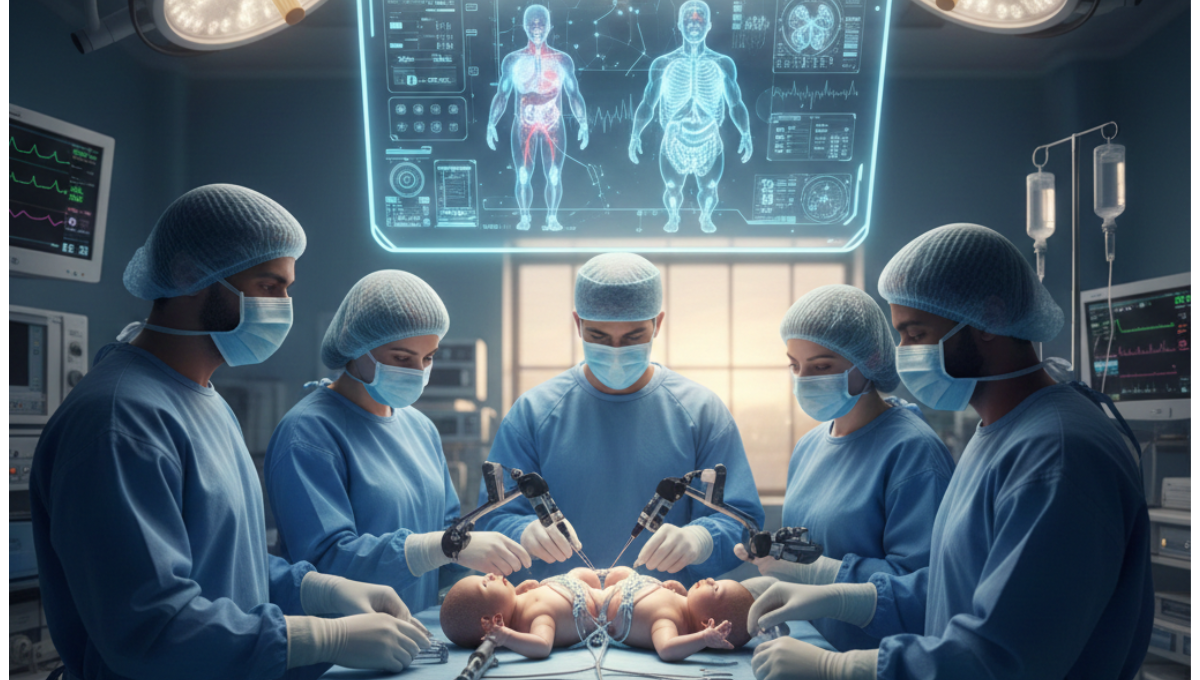
Cojoined Twins Separated: Causes, Risks, and Medical Technology
When cojoined twins separated, it marked a brave step toward survival and freedom despite many medical challenges.
What are conjoined twins?
Cojoined twins separated are identical twins who are physically connected at birth. This happens when one fertilized egg does not fully divide during early pregnancy. Because of this, the babies remain attached to each other. They may share skin, organs, or clear body parts. The connection can be at the chest, head, or abdomen. This condition is rare and complex.
The types of conjoined twins separated depend on where the bodies are joined. Some are connected at the chest, some at the head, others at the abdomen, or the pelvis. Each type demands a different surgical method.
Symptoms & Causes
Cojoined twins separated are usually found before birth because the babies are physically joined at one or more parts of the body and may share organs or blood flow, which can affect their movement and growth. This condition happens when a single fertilized egg does not fully divide during early pregnancy, causing the embryos to remain partly connected, and it is not related to genetics, lifestyle, or environmental reasons. These physical connections can affect how the twins grow and develop, sometimes causing health problems.
Treatment of Cojoined Twins
The treatment of cojoined twins separated depends on the bodies being connected and which organs are shared. In many cases, doctors do not speed into surgery and first focus on careful checking and supportive care. Detailed imaging tests are done to understand the shared structures and overall health of both babies. If division is possible, a operate plan is created after months of check.
Treatment may include:
- Continuous medical checking after birth
- Imaging tests such as MRI and CT scans
- Planning for surgery if conditions allow
- Post-surgery care, including recovery
How rare is this condition?
Cojoined twins separated are highly rare worldwide. Many pregnancies involving cojoined twins do not touch full term. Among those born alive, living depends on how much body parts are shared and how well vital organs function.
Because of this, every case becomes a learning chance for the medical groups. Hospitals often document these processes in detail to improve future outcomes.
Advances in cojoined twins separated
Technology has updated the way conjoined twins are treated.
Imaging Invention
High-resolution imaging allows Unique surgical planning accuracy.
Surgical Tools
Minimally entering and robotic tools reduce trauma and improve recovery.
Intensive Care
Better post-surgery monitoring helps weak patients survive and succeed.
The Separation Surgery Process
- Planning and Preparation:
Doctors study x-ray to understand shared organs and bones. A detailed surgical plan is made. - Anesthesia and Cuts:
Both twins are given pain blockers. Surgeons carefully cut the skin and muscles joining them. - Separating Organs and Blood Vessels:
Shared organs and blood vessels are carefully separated or restored. - Bone Separation and Fixed:
If bones are joined, they are cut and reshaped. Doctors repair organs and skin as needed. - Closing and Recovery:
Doctors’ cuts are closed. Twins are closely checked in strong care and begin recovery.
Doctors work together on both twins. They monitor vital signs closely. Blood loss and infection are major issues.
Risk of cojoined twins separated
Separation is risky. Possible problem include:
- Death of one or both twins
- Organ failure
- Severe bleeding
- Infection
- Long recovery and difficulty
Some twins cannot be separated safely. In those cases, doctors may advise against surgery.
Conclusion
Separating cojoined twins separated showcases the power and limits of modern medicine. It demands skill, patience, and moral care. Though not every case allows separation, many twins have gone on to live independent, fulfilling lives. Medical invention continues to offer hope for even better outcomes in the future.
Families and doctors work closely to make the best decisions. Every case is unique, and careful care before and after surgery is important for the twins’ health and recovery.